Science & Fermentation
Fermented Hot Sauce:
Fire, Bacteria, and What Happens in the Jar
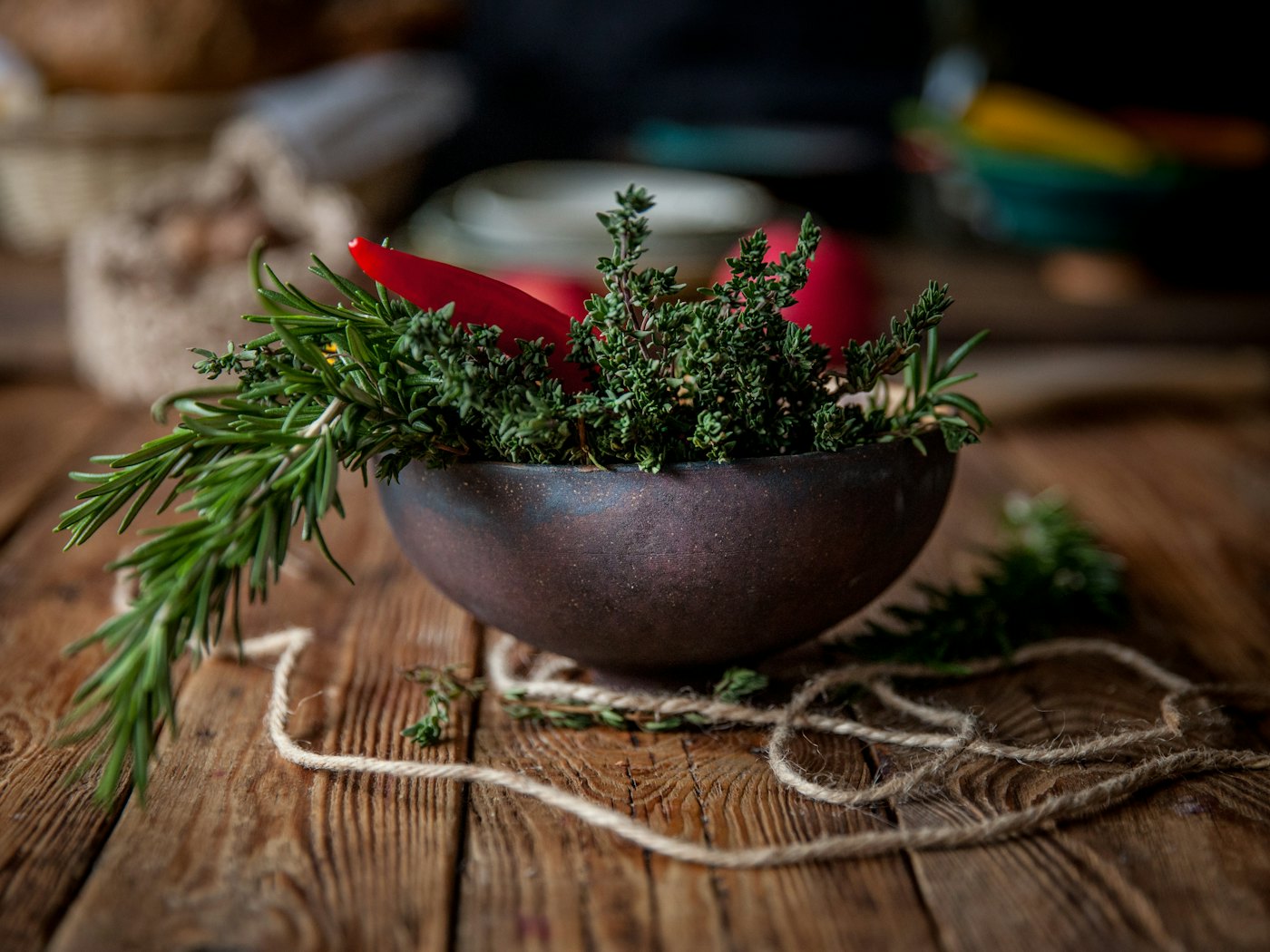
The science behind lacto-fermented chili peppers — how Lactobacillus plantarum transforms raw pepper into something far more complex, why capsaicin hijacks a heat receptor in your nervous system, and what the research actually says about eating hot sauce for your health.
What Actually Happens in the Brine
Lacto-fermentation of chili peppers is not a single microbial event. It is a succession — a sequence of bacterial species that rise, dominate, and recede as the chemical environment changes around them. Understanding this succession explains why brine concentration, temperature, and fermentation time produce such dramatically different outcomes.
The Opening Act: Leuconostoc mesenteroides
Leuconostoc mesenteroides is typically the first species to become active, appearing within the first 24–48 hours of fermentation. It is a heterofermentative organism, meaning it produces not only lactic acid but also carbon dioxide and small amounts of ethanol and acetic acid. The CO₂ it generates creates an anaerobic environment that suppresses oxygen-loving spoilage organisms — effectively setting the stage for the lactobacilli that follow.
The Workforce: Lactobacillus plantarum and L. brevis
Lactobacillus plantarum is the workhorse of mature chili fermentation. It is acid-tolerant and homofermentative under most conditions, converting sugars almost entirely into lactic acid. As pH falls below 4.5, L. plantarum outcompetes everything else. L. brevis is a heterofermentative species that co-dominates in many ferments, contributing to flavor complexity through the production of esters and acetic acid. The interplay between these two species is largely responsible for what distinguishes a great fermented hot sauce from a merely acidic one.
Brine Concentration: The 2–3% Rule
Salt concentration is the single most controllable variable in home fermentation. Use 2–3% salt by weight of water (not by total weight of the combined ingredients) with non-iodized salt — iodine inhibits lactic acid bacteria. At 2%, fermentation is faster, more acidic, and produces more volatile aromatics. At 3%, the process slows and bacterial diversity is somewhat reduced, but the resulting sauce often has more structural complexity in its acid profile. Below 1.5%, you risk Gram-negative pathogen growth before LAB can acidify the brine sufficiently. Above 3.5%, LAB activity itself is inhibited and fermentation may stall.
Time and Temperature
The optimal fermentation window for chili peppers is 68–75°F (20–24°C). Below 65°F, fermentation slows significantly and the Leuconostoc phase may extend, producing more CO₂ but slower acidification. Above 80°F, fermentation accelerates but flavor complexity suffers — you lose the slower ester-building reactions that come with a more deliberate pace. A 3–14 day window covers most use cases: three days produces a lightly fermented, bright-tasting sauce; fourteen days yields something more rounded, more deeply acidified, and noticeably more umami.
Capsaicin: What Fermentation Does (and Doesn't) Change
Capsaicin (8-methyl-N-vanillyl-6-nonenamide) is a lipophilic alkaloid produced in the placental tissue of chili peppers, concentrated in the white ribs rather than the seeds. It is the compound responsible for the sensation of heat — but calling it "heat" is technically a misnomer. Capsaicin does not produce thermal heat. It binds a receptor that normally responds to thermal heat.
Capsaicin's Stability During Fermentation
Because capsaicin lacks a hydroxyl group adjacent to its vanillyl moiety, it is chemically stable across the pH range produced by lacto-fermentation. The molecule does not degrade in acid, is not consumed by lactic acid bacteria as a carbon source, and is not significantly volatile at fermentation temperatures. The perception of reduced pungency in some long-fermented sauces is real but modest: extended fermentation (beyond 14 days) can trigger capsaicinoid oxidation — likely through LAB-produced peroxidases — reducing measured capsaicin content by roughly 10–20% in extended ferments. This is rarely perceptible as a dramatic drop in heat; it registers more as a "softer" heat onset.
What Fermentation Does Change
The meaningful changes capsaicin-adjacent to fermentation are not about capsaicin itself — they are about everything around it. Raw chili peppers contain bitter chlorogenic acids, sharp malic acid, and tannins from the skin. Fermentation degrades many of these compounds, making the capsaicin's heat seem cleaner and more focused rather than more intense. Proteolysis by LAB breaks down pepper proteins into free amino acids, dramatically increasing umami. The resulting fermented sauce is not hotter than its raw counterpart, but the heat arrives differently — without the astringent edge that raw pepper brings.
Antioxidant bioavailability also increases. The fermentation process breaks down plant cell walls, liberating bound polyphenols. Vitamin C content decreases (it is consumed by LAB), but the total measured antioxidant capacity of fermented pepper relative to fresh is frequently higher in studies measuring ORAC values, because the liberated phenolics more than compensate for the ascorbic acid loss.
TRPV1: The Ion Channel That Makes Spice Feel Like Fire
The transient receptor potential vanilloid 1 channel — universally abbreviated TRPV1 — is a nonselective cation channel expressed in nociceptive (pain-sensing) neurons throughout the peripheral nervous system. Under normal conditions, it activates in response to temperatures above approximately 43°C, to low pH (below 5.9), and to certain endogenous lipids. Capsaicin hijacks this channel by binding to a hydrophobic pocket within the channel's transmembrane domain, forcing it open at room temperature.
What Happens When It Opens
When capsaicin binds and TRPV1 opens, calcium and sodium ions flood into the neuron, generating an action potential that the brain receives and interprets as burning heat — even though no thermal event has occurred. This is the mechanism behind the "burn." The signal travels through C-fibers (slow, burning pain) and Aδ-fibers (fast, sharp pain) to the dorsal horn of the spinal cord and up to the somatosensory cortex.
The Pain-to-Pleasure Shift
Here is where the biology becomes genuinely interesting. Repeated TRPV1 activation depletes the presynaptic stores of substance P, a neuropeptide involved in transmitting pain signals. Without substance P, the same stimulus produces a diminished pain response — this is the neurological basis for the desensitization that regular chili eaters experience. Simultaneously, the brain's interpretation of a large TRPV1-mediated signal triggers endorphin and enkephalin release, producing the mild euphoric quality that chili veterans know and seek. The pain is real; the pleasure is a downstream consequence of a system calibrated to provide relief from extreme pain signals.
Thermogenesis and Brown Adipose Tissue
TRPV1 receptors are expressed not only in sensory neurons but also in tissues throughout the body, including adipose tissue. Capsaicin binding in brown adipose tissue (BAT) activates uncoupling protein 1 (UCP1), a mitochondrial protein that dissipates proton gradients as heat rather than ATP. The result is a measurable — if modest — increase in metabolic rate. Studies consistently show acute thermogenic effects of 4–5% above baseline caloric expenditure following capsaicin consumption, though the magnitude varies considerably between individuals depending on BAT activation status and habitual capsaicin exposure.
Substance P Depletion in Topical Applications
The same mechanism that creates desensitization in the gut has been harnessed for pain management. Topical capsaicin (typically 0.025–0.1% in OTC preparations, up to 8% in clinical patches like Qutenza) applied repeatedly to a painful area depletes local substance P stores in cutaneous C-fibers. This has demonstrated clinical efficacy in post-herpetic neuralgia, diabetic neuropathy, and osteoarthritis — conditions where the underlying pathology cannot be easily addressed but the transmission of pain signals can be pharmacologically reduced at the receptor level.
The Research: What Capsaicin and Fermented Peppers Actually Do
The health literature on capsaicin is larger and more rigorous than most people assume. The challenge is separating the robust from the preliminary. The table below covers the mechanisms with the strongest evidential basis.
| Domain | Mechanism | Evidence Level | Key Finding |
|---|---|---|---|
| Cardiovascular | Reduced lipid peroxidation; vasodilation via TRPV1 on endothelial cells | Strong — meta-analysis | Wang et al. 2015: regular chili consumption associated with −25% cardiovascular mortality in 485,000-person cohort |
| Metabolic | BAT thermogenesis via UCP1; reduced adipogenesis in in vitro models | Moderate — human RCTs | Capsaicin reduces fat accumulation; effect size modest without caloric restriction; strongest in BAT-active individuals |
| Gut barrier | TRPV1 on enterocytes modulates tight junction proteins; anti-inflammatory in healthy mucosa | Emerging — animal + in vitro | The capsaicin-gut paradox: may strengthen healthy mucosal barrier, but irritates inflamed or compromised gut (IBD, ulcer) |
| Antimicrobial | Capsaicin disrupts bacterial membrane integrity at high concentrations | In vitro only | Not established at dietary doses; fermentation-derived LABs may provide independent gut microbiome benefit |
| Pain management | Substance P depletion via repeated TRPV1 activation | Strong — clinical trials | 8% topical capsaicin (Qutenza) FDA-approved for post-herpetic neuralgia; dietary doses insufficient for dermatological effect |
| Antioxidant | Fermentation liberates bound phenolics; increases ORAC vs. raw pepper | Moderate — controlled studies | Lacto-fermented red pepper showed significantly higher antioxidant activity vs. fresh; vitamin C lost, net ORAC higher |
The Gut Paradox
The most clinically important nuance in capsaicin research is what researchers call the gut paradox. In healthy gastrointestinal epithelium, TRPV1 receptors on enterocytes appear to play a protective role — their activation modulates tight junction integrity and reduces intestinal permeability. Animal models show that capsaicin-supplemented diets reduce LPS-induced gut barrier disruption. However, in inflamed, ulcerated, or otherwise compromised gut tissue, TRPV1 upregulation is part of the inflammatory cascade, and capsaicin exposure worsens symptoms. The practical takeaway: healthy people with robust gut function may benefit from regular capsaicin consumption; people with active IBD, peptic ulcers, or significant GERD should treat the research with more caution and consult clinicians rather than self-prescribing hot sauce as a therapeutic.
Vinegar-Based vs. Brine-Fermented: What the Labels Won't Tell You
The commercial hot sauce market conflates two fundamentally different production methods, and the distinction matters for both flavor and health outcomes.
Vinegar-Based (Acidified)
Most commercial hot sauces — including Frank's RedHot, Texas Pete, and most mass-market cayenne sauces — are produced by combining fresh or minimally processed peppers with distilled vinegar. The acidity is achieved chemically, instantly, via the vinegar itself rather than microbial production. There is no microbial activity in these products beyond brief maceration. They are shelf-stable by pH alone, consistent in flavor, and inexpensive to produce at scale. The flavor profile is dominated by acetic acid's sharp bite and the raw pepper's fresh notes. No probiotic bacteria survive; no proteolysis occurs.
True Lacto-Fermented
Tabasco Original Red Sauce is the canonical example of genuine commercial lacto-fermentation. McIlhenny Company mashes Capsicum frutescens peppers with Avery Island salt, packs the mash into white oak bourbon barrels with perforated wooden lids, and ages it for three years. Vinegar is added only after fermentation is complete — to dilute and adjust. The result has a measurably different flavor profile from vinegar-acidified competitors: rounder acidity (lactic + acetic), reduced raw bitterness, deeper ester notes from three years of slow fermentation, and a characteristic slight funkiness from the barrel interaction.
Cholula and Valentina — both Mexican brands — begin with a fermented base, though their fermentation is shorter and less formalized than Tabasco's process. They are more properly described as fermentation-initiated rather than fermentation-defined.
Sriracha (Huy Fong): Despite widespread belief, sriracha is not a lacto-fermented product. The Huy Fong process involves a brief rest period for the chili-garlic mash before vinegar, salt, and sugar are added — this is maceration, not lacto-fermentation. The tangy flavor comes from vinegar. Garlic's low pH also inhibits LAB activity during the rest period. This does not make it inferior as a condiment; it simply makes it a different product category.
Making Fermented Hot Sauce at Home
Home fermentation gives you complete control over pepper variety, brine concentration, and fermentation time — variables that no commercial producer can optimize for your specific palate. The method below works for whole peppers (better for longer ferments, more complex flavor) and for mash fermentation (faster acidification, more even LAB distribution).
Brine-Fermented Hot Sauce — Whole Pepper Method
Select peppers. Any variety works. Red fresnos, cayennes, or serranos are forgiving choices for a first batch. Remove stems; leave seeds and ribs intact for full capsaicin extraction. Weight your peppers — you'll need to know this to calculate water volume.
Make the brine. Dissolve 20–25g of non-iodized salt (kosher, sea salt, or pickling salt) per 1 liter of filtered or dechlorinated water. This produces a 2–2.5% solution. If your tap water is heavily chlorinated, let it sit uncovered overnight — chlorine is a strong LAB inhibitor.
Pack and submerge. Pack peppers tightly into a clean mason jar. Pour brine over to cover, leaving 1–1.5 inches of headspace. Peppers must stay below the brine surface throughout fermentation — use a fermentation weight to keep them submerged. Oxygen exposure above the brine line is where mold risks arise.
Seal with an airlock lid. A standard two-piece mason jar lid allows CO₂ escape but may need daily "burping" in the first few days of active fermentation. An airlock lid eliminates this entirely and reduces oxygen contact. Store at 68–75°F (20–24°C), out of direct sunlight.
Ferment 7–14 days. Check daily. Bubbling visible in the brine within 24–72 hours indicates active LAB activity (CO₂ from Leuconostoc). Taste beginning on day 5. At day 7, pH should be approaching 4.0–4.2 if fermentation is vigorous. If you have a pH meter, target ≤4.0 before blending for shelf-stable sauce.
Blend and adjust. Remove peppers and reserve brine. Blend peppers with enough brine to reach desired consistency. Add garlic, roasted shallots, or citrus at this stage. Strain for a smooth sauce; leave pulp in for something more textural. Add a tablespoon of apple cider vinegar to lock pH if desired. Bottle and refrigerate — shelf life is 3–6 months under refrigeration.
Troubleshoot intelligently. White flat film on brine surface: kahm yeast — benign, skim it off. Fuzzy, raised, colored growth above the brine line: mold — discard the batch. No bubbling after 96 hours: check brine concentration (too salty), water quality (chlorine), or room temperature (too cold). Never seal with a non-venting lid during active fermentation — CO₂ pressure can rupture a jar.
YIELD — approximately 250ml finished sauce per 400g of peppers. Mash method: blend raw peppers first, mix with 2% brine by total weight, ferment in loosely sealed jar 5–7 days, then blend again with reserved liquid and strain. Faster, more homogeneous, slightly less complex.
Glass Fermentation Weights — Wide Mouth Mason Jars
Keeps peppers fully submerged below brine throughout fermentation. Eliminates the primary cause of mold and spoilage in home ferments.
Mason Jar Airlock Lid Kit — Wide & Regular Mouth
Vents CO₂ without allowing oxygen ingress. Eliminates daily "burping," reduces kahm yeast risk, and gives ferments a cleaner, more consistent result than standard two-piece lids.