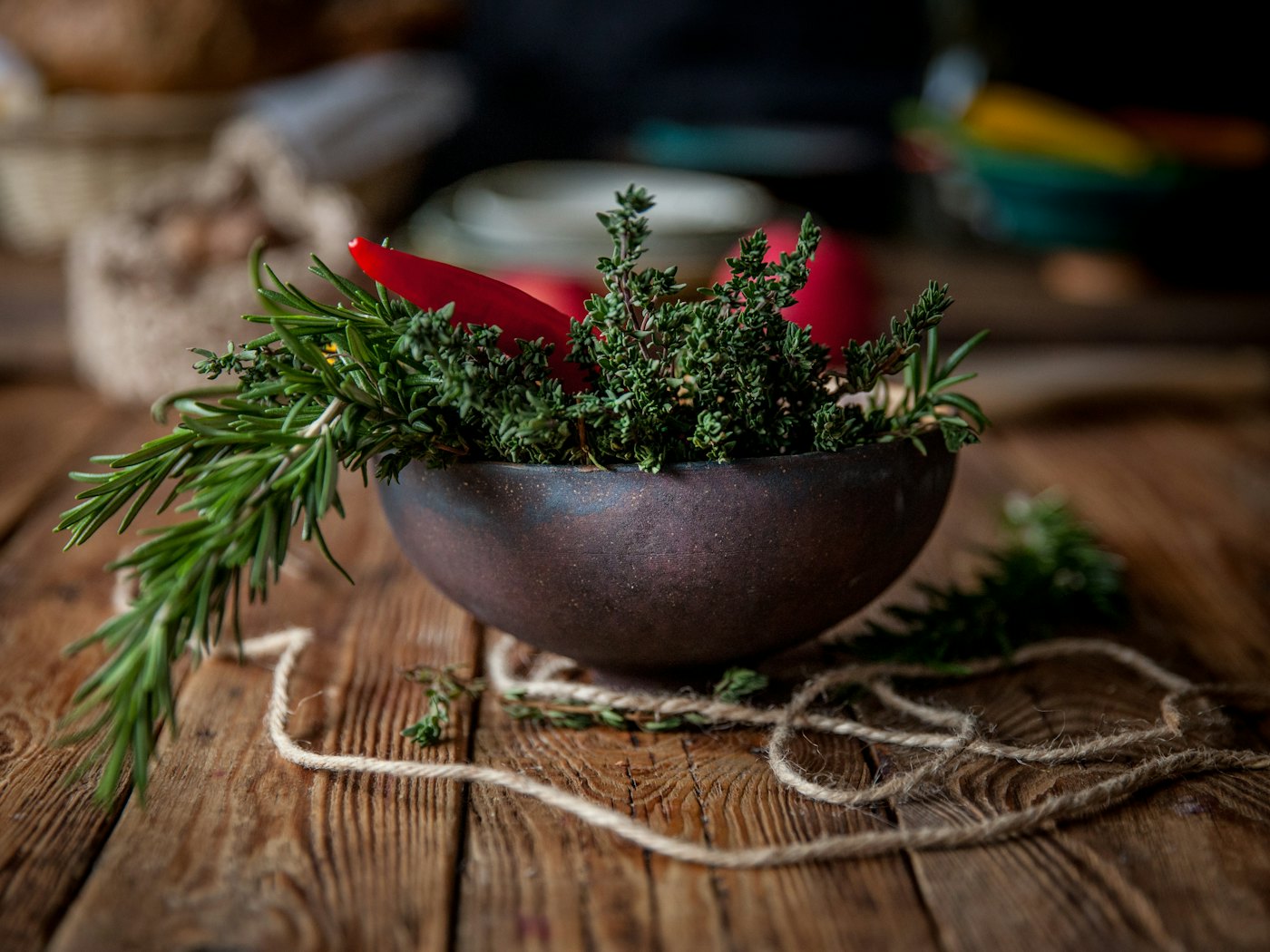
Why Fermented Hot Sauce Is Different From Every Bottle on the Shelf
Pick up a bottle of Tabasco, Frank's RedHot, or Cholula. The preservative doing the work is acetic acid — either added directly as distilled white vinegar, or produced by a fast Acetobacter fermentation. The bacteria are long gone by the time the bottle is filled. What you get is stable, consistent heat with a sharp vinegar bite.
Lacto-fermented hot sauce operates on a fundamentally different principle. The preservative is lactic acid, produced in situ by Lactobacillus species that live on the surface of fresh peppers. No starter culture is needed, no vinegar is added at the start. You create an anaerobic brine environment, the native bacteria take over, and they acidify the mash to a pH of 3.2–3.8 over five to seven days.
The core distinction: Vinegar hot sauce is preserved by acid added from outside. Fermented hot sauce is preserved by acid generated from within — by living microorganisms that, under the right conditions, survive into the bottle and potentially into your gut.
This distinction matters for flavor, bioavailability, and gut biology. The lactic acid environment is softer and more complex than acetic acid — it produces trace ethanol, CO2, and a class of antimicrobial peptides called bacteriocins (including nisin and plantaricin) that actively suppress pathogenic bacteria. The vinegar bottle preserves; the fermented bottle defends.
The Microbiology: What Is Actually Happening in Your Fermentation Jar
Wild lacto-fermentation of peppers follows a predictable ecological succession. In the first 24–48 hours, a diverse community of bacteria from the pepper surface competes for resources. As lactic acid accumulates and pH drops, sensitive species die off, and Lactobacillus plantarum emerges as the dominant organism.
L. plantarum is remarkable for several reasons:
- Salt tolerance: Thrives in 2–4% NaCl environments where most competing organisms are inhibited.
- Acid tolerance: Survives and continues metabolizing at pH levels that kill most bacteria — including the low-pH conditions it creates itself.
- Heterofermentative capability: Produces lactic acid as its primary metabolite, but also generates CO2, trace ethanol, and flavor compounds including diacetyl and acetoin.
- Ecological versatility: The same species drives sourdough, kimchi, sauerkraut, brine-cured olives, and traditional miso. It is one of the most studied and culinarily significant bacteria on earth.
Other species contribute early in the fermentation. Leuconostoc mesenteroides — also found in sauerkraut and kimchi — produces CO2 quickly, which purges oxygen from the brine and establishes the anaerobic conditions that favor L. plantarum. Lactobacillus brevis contributes flavor compounds and can tolerate higher temperatures. But within three to five days in a well-sealed jar, L. plantarum dominates.
What the bacteria produce
The metabolic outputs of lacto-fermentation go beyond simple acidification:
- Lactic acid — the primary preservative, responsible for the tangy, rounded sour flavor that distinguishes fermented from vinegar-based sauces.
- CO2 — produced during the active fermentation phase; causes bubbling in the jar and creates slight effervescence in unblended sauce.
- Trace ethanol — produced as a minor byproduct; typically 0.1–0.5% in finished fermented vegetable products.
- Bacteriocins — antimicrobial peptides including plantaricin (produced by L. plantarum) that target and kill competing and pathogenic bacteria. These are part of why a properly fermented hot sauce at correct pH is genuinely self-preserving.
- Short-chain fatty acids — including acetate, which contributes to flavor complexity.
The combination of low pH (3.2–3.8), lactic acid, and bacteriocins makes a properly fermented hot sauce inhospitable to Listeria, Salmonella, and E. coli. This is not incidental food safety — it is the evolved function of these organisms, which have been co-fermenting peppers and vegetables alongside humans for millennia.
Fermentation Equipment · Amazon
Fermentation Crock Weights (Glass, Anaerobic)
Keep peppers submerged below the brine line — the single most important step in preventing mold and ensuring clean lacto-fermentation. Glass weights sized for wide-mouth mason jars.
As an Amazon Associate, BorderlessKitchen earns from qualifying purchases.
Shop on Amazon ›
Capsaicin: The Molecule at the Center
Capsaicin (8-methyl-N-vanillyl-6-nonenamide) is the primary capsaicinoid in hot peppers, accounting for roughly 70% of the total capsaicinoid content. Dihydrocapsaicin accounts for another 20%, with nordihydrocapsaicin, homocapsaicin, and homodihydrocapsaicin making up the remainder. Together these determine a pepper's Scoville heat unit (SHU) rating.
Capsaicin is synthesized in the placental tissue of the pepper (the white membrane connecting seeds to the pod wall) — not, as commonly believed, in the seeds themselves. The seeds only taste hot because they are in contact with capsaicin-rich tissue. This matters when you ferment: the more you leave the placenta intact during brine fermentation, the hotter the finished sauce.
Why capsaicin burns: TRPV1 explained
The TRPV1 receptor (Transient Receptor Potential Vanilloid 1) is a non-selective cation channel expressed on unmyelinated C-fibers and lightly myelinated Aδ-fibers throughout the body — including oral mucosa, skin, and the gut. Its primary physiological role is thermosensation: TRPV1 opens when exposed to temperatures above approximately 43°C, allowing Ca²⁺ and Na⁺ to flow into the cell and triggering the sensation of burning heat.
Capsaicin binds to a hydrophobic pocket within the TRPV1 transmembrane domain, causing the same channel opening as heat — but at body temperature. Your brain receives an identical signal to what it would receive from touching a hot stove. The "burn" is not metaphorical; it is the literal experience of heat sensation triggered by a chemical ligand.
Key point: TRPV1 is not just in your mouth. Dense expression exists throughout the gastrointestinal tract — in the esophagus, stomach, small intestine, and colon. Capsaicin you swallow continues activating TRPV1 receptors throughout its transit. This is why capsaicin has measurable effects on gut motility, visceral pain, and gut-brain signaling — not just oral burn.
Does Fermentation Change Capsaicin Content?
This is the question most people ask when they first encounter fermented hot sauce, and the answer is more nuanced than a simple yes or no.
The short answer: mostly no. Capsaicin is a chemically stable compound. It is not degraded by the pH changes of lacto-fermentation (3.2–3.8 is acidic, but capsaicin is stable across a much broader pH range). It is not metabolized by Lactobacillus plantarum as a carbon source. It survives cooking temperatures. It survives vinegar addition. A pepper that was very hot before fermentation will produce a very hot sauce after fermentation.
However, the full picture includes a few documented mechanisms that can produce modest reductions:
- Pectin breakdown: Fermentation partially degrades pepper cell walls via endogenous pectinases. As pectin breaks down, some capsaicin may associate with pectin breakdown products and be physically removed during straining, rather than being chemically degraded.
- Enzymatic activity: Some studies have observed that native pepper enzymes (peroxidases, laccase) can oxidize capsaicin under certain conditions, but the acidic fermentation environment significantly inhibits these enzymes.
- Redistribution: Capsaicin partitions into oil. In a water-based brine fermentation, some capsaicin may distribute unevenly across the mash and be partially lost in strained-off brine.
The practical upshot: most research observing fermented pepper preparations finds that the majority of capsaicin survives. Some studies show modest reductions of 10–25% in total capsaicinoid content after extended fermentation. This is unlikely to be noticeable in a finished sauce where you are blending the entire mash.
Pepper Heat Table: Capsaicin Content by Variety
Capsaicin Health Effects: What the Research Actually Says
The intersection of capsaicin pharmacology and gut biology has generated a substantial research literature over the past two decades. TRPV1's dense expression in the gastrointestinal tract makes capsaicin one of the most direct dietary modulators of gut sensation we know of. Here is what is supported by evidence and what remains speculative.
Visceral pain and IBS
TRPV1 activation by capsaicin initially stimulates the release of substance P — a neuropeptide involved in pain signal transmission — from C-fibers. But with chronic, repeated exposure at low doses, something counterintuitive happens: substance P stores in the nerve terminal become depleted, and the fiber becomes desensitized. TRPV1 downregulates. The same receptor that produced burning sensation on first exposure becomes less responsive over time.
This desensitization mechanism has been explored in clinical research on irritable bowel syndrome. IBS is characterized in part by visceral hypersensitivity — the gut registers pain at stimuli that would not be painful in healthy individuals. TRPV1 expression is elevated in IBS patients compared to controls. Several small studies have found that chronic low-dose capsaicin supplementation reduces visceral pain symptoms in IBS patients — presumably via TRPV1 desensitization reducing gut pain signaling. This is early-stage research; it does not yet support clinical recommendations, but the mechanism is biologically plausible and reproducible in animal models.
Metabolism and thermogenesis
Capsaicin activates TRPV1 in brown adipose tissue (BAT), triggering a signaling cascade that upregulates UCP1 (uncoupling protein 1 — also called thermogenin). UCP1 uncouples mitochondrial oxidative phosphorylation from ATP synthesis, dissipating energy as heat rather than capturing it as ATP. This is non-shivering thermogenesis — the same process that allows cold-adapted mammals to generate heat without muscle contraction.
In human studies, acute capsaicin ingestion produces a measurable but modest thermogenic effect — estimates range from 30 to 80 additional kilocalories expended over several hours. Across clinical trials, this translates to approximately +50 kcal/day on average with consistent capsaicin intake. This is real but unlikely to be a primary driver of weight change on its own; it is more accurately described as a minor adjunct to caloric deficit rather than a standalone intervention.
Cardiovascular effects
TRPV1 activation by capsaicin in vascular endothelial cells stimulates endothelial nitric oxide synthase (eNOS), leading to increased nitric oxide (NO) production. NO causes smooth muscle relaxation in blood vessel walls — vasodilation — and lowers blood pressure acutely. Epidemiological data from populations that consume chili peppers regularly (notably in China and Italy) suggests an association with reduced cardiovascular mortality, though causality from dietary capsaicin alone is difficult to isolate from confounding variables like overall dietary pattern.
Anti-cancer signaling: preliminary and human-trial caveats
Capsaicin has been shown to induce apoptosis (programmed cell death) in multiple cancer cell lines in vitro — including prostate, pancreatic, and colon cancer cells. The proposed mechanisms involve ROS generation, mitochondrial membrane potential disruption, and modulation of NF-κB signaling. However: in vitro cancer cell killing does not predict clinical efficacy. There are currently no human clinical trials demonstrating that dietary capsaicin prevents or treats cancer. This is an area of active basic science research, not clinical application.
What Fermentation Adds to the Capsaicin Story
Beyond preserving capsaicin through the fermentation process, lacto-fermentation of hot peppers adds several biologically meaningful changes:
Probiotic delivery
Lactobacillus plantarum is among the most acid-tolerant Lactobacillus species — a property that is directly relevant to gut delivery, since gastric acid (pH 1.5–3.5) kills most bacteria before they reach the small intestine. Research on L. plantarum strains has documented survival through simulated gastric transit in a subset of studies, though survival rates vary significantly by strain and individual gastric acid secretion. Critical caveat: cooking or heating your fermented hot sauce will kill live bacteria. Add fermented sauce after cooking to preserve probiotic potential.
Increased polyphenol bioavailability
Hot peppers are rich in flavonoids — particularly quercetin and luteolin — which exist primarily as glycosides (bound to sugar molecules) in raw peppers. Glycosides are less well-absorbed than their aglycone forms. During lacto-fermentation, bacterial glycosidases cleave these sugar groups, releasing the free aglycone forms. This increases the bioavailability of quercetin and luteolin from fermented pepper products compared to raw or vinegar-processed peppers. Quercetin has documented anti-inflammatory and antioxidant properties; luteolin has shown anti-inflammatory effects in preclinical research.
Reduced anti-nutrients
Raw peppers contain phytates and tannins that can bind minerals and reduce absorption. Lacto-fermentation degrades a significant portion of these anti-nutrients through phytase activity, improving the net mineral availability from the sauce — though the contribution of hot sauce to total mineral intake is modest given typical serving sizes.
Fermented Habanero-Mango Hot Sauce
Wild lacto-ferment · 5–7 day brine · No starter culture needed · Makes approx. 300ml
Ingredients
200g fresh habaneros (stems removed)
1 ripe mango, peeled and diced
4 garlic cloves, peeled
1 small shallot, roughly chopped
2% salt brine (20g salt per 1L water)
1 tbsp apple cider vinegar (post-ferment)
1 tsp honey (optional, post-ferment)
Juice of 1 lime (post-ferment)
Method
- Prepare your 2% brine: dissolve 20g non-iodized salt in 1 liter of filtered or room-temperature water. Iodized salt can inhibit fermentation — avoid it.
- Pack habaneros, mango, garlic, and shallot into a clean wide-mouth mason jar. Pack tightly. The mango adds fermentable sugars that accelerate early fermentation activity.
- Pour brine over peppers, leaving 2–3cm headspace. All solids must be submerged below the brine line. Use a fermentation weight to hold them under. Loosely cover with a lid or airlock.
- Ferment at room temperature (18–24°C) for 5–7 days. You should see bubbling activity within 24–48 hours. Taste from day 3 onward — pull when the sourness and flavor complexity satisfy you, and pH reads below 3.8 if testing.
- Drain solids, reserving all brine. Blend peppers, mango, and garlic until smooth, adding reserved brine to reach desired consistency. For a very smooth sauce, pass through a fine-mesh strainer.
- Add apple cider vinegar, lime juice, and honey. Taste, adjust salt and acid. Bottle in a clean glass jar or squeeze bottle. Refrigerate immediately.
Safety check: A correctly fermented sauce will smell sour and tangy — not putrid or acetone-like. Any sign of visible pink or black mold (not white kahm yeast, which is harmless) means discard. If peppers float above the brine line for extended periods, risk of spoilage increases significantly — use your weights.
Fermentation Monitoring · Amazon
pH Test Strips for Fermentation (3.0–5.5 Range)
The simplest way to confirm your ferment is safe and complete. Target pH 3.2–3.8 for fully fermented hot sauce. Strips specifically calibrated for acidic fermentation ranges give accurate readings at low cost.
As an Amazon Associate, BorderlessKitchen earns from qualifying purchases.
Shop on Amazon ›
Practical Fermentation Variables That Affect Outcome
Understanding the microbiology allows you to troubleshoot and optimize. These are the variables that most directly influence the quality of a fermented hot sauce:
- Salt concentration: 2–3% is the target range. Below 1.5% risks mold and spoilage organisms outcompeting Lactobacillus. Above 4% can stall fermentation by inhibiting even salt-tolerant L. plantarum. Use a kitchen scale — eyeballing salt is the most common source of fermentation failure.
- Temperature: 18–24°C (65–75°F) is optimal. Higher temperatures (>28°C) accelerate fermentation but favor soft texture and can produce off-flavors. Lower temperatures (<15°C) slow fermentation significantly; useful if you want to extend the process for flavor development.
- Anaerobic environment: Oxygen is the enemy of clean lacto-fermentation. Keep peppers submerged. Use an airlock lid if possible. The CO2 produced by active fermentation helps purge oxygen from headspace, which is why a loosely sealed jar can work but a sealed airlock is more reliable.
- Water quality: Chlorinated tap water can inhibit fermentation. Use filtered water or let tap water sit uncovered for 30 minutes to allow chlorine to off-gas before making brine.
- Vessel cleanliness: Clean but not sterile is the goal. Soap-washed, rinsed jars work well. Avoid bleach sanitizers, which can leave residues that inhibit fermentation.
Frequently Asked Questions
Does fermentation destroy capsaicin?
No. Capsaicin is chemically stable and survives lacto-fermentation intact. Some modest reduction in total capsaicinoid content is possible due to physical redistribution during straining, but your fermented habanero sauce will be very close in heat to the raw habanero you started with — often with a more complex, rounded character rather than sharp raw bite.
Do the probiotic bacteria survive to the gut?
Lactobacillus plantarum is among the more acid-tolerant Lactobacillus species and has been documented surviving gastric transit in some research contexts. However, survival varies by strain and individual. The key practical point: do not cook the sauce. Add it raw to finished dishes to preserve live cultures.
What is the ideal fermentation time?
Five to seven days at room temperature produces a well-acidified sauce with complex flavor. Three days gives a lightly sour, fresher-tasting result. Ten or more days produces a more pronounced sour note and deeper fermented flavor. Taste daily from day three and pull when the flavor matches your preference — there is no single correct endpoint.
Can I use dried peppers?
Wild lacto-fermentation relies on the native bacteria on fresh pepper surfaces. Dried peppers have lost most of these bacteria. You can rehydrate dried peppers and ferment them, but you will need to add a starter culture (unpasteurized whey, brine from a previous ferment, or a commercial Lactobacillus starter) to initiate reliable fermentation.
Why does my brine have white foam or a white film?
White kahm yeast is a common and harmless surface growth in vegetable ferments. It forms a flat, white film and does not indicate spoilage. Skim it off if it bothers you, keep vegetables submerged below the brine line, and continue. What you want to watch for — and discard — is any fuzzy mold growth that is pink, black, or green.