Ethiopian Injera and Doro Wat: 3-Day Teff Fermentation, Berbere, and the Art of the Communal Mesob
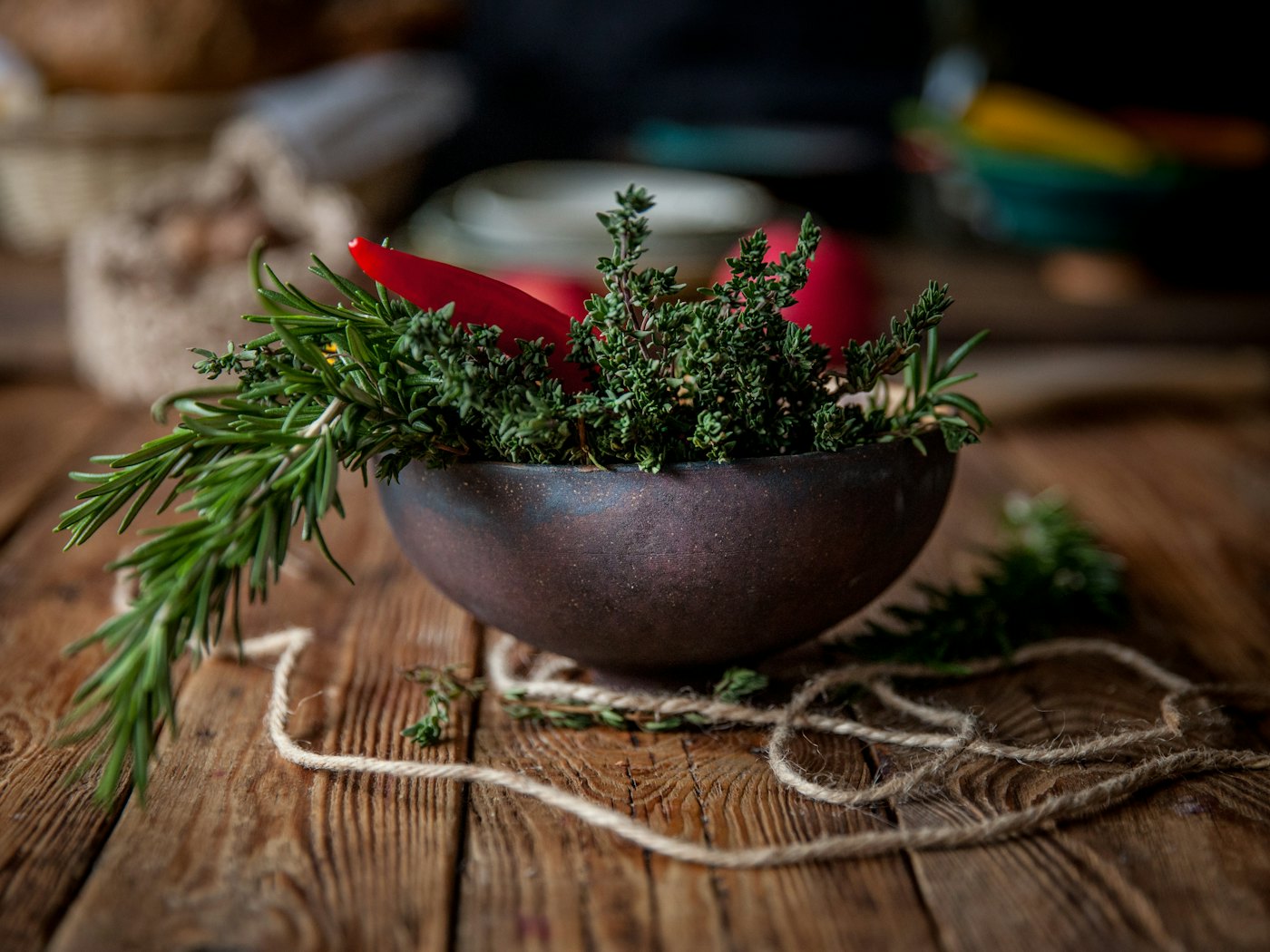
Whole herbs and spices carry the aromatics that dried blends lose on the shelf.
Updated: June 2026injera recipe · doro wat recipe · Ethiopian food · how to make injera · teff injera · Ethiopian spiced chicken · berbere spice · nit'r kibbeh · Ethiopian recipes · authentic injera · doro wat authentic · Ethiopian wat · how to cook Ethiopian food · teff fermentation · injera batter · Ethiopian cuisine
Ethiopian cuisine is built on two pillars: injera (the sour fermented teff flatbread that functions as both plate and utensil) and wat (thick stews eaten communally from atop it). Doro wat — chicken drumsticks and whole eggs simmered in a deep red berbere-spiced sauce enriched with nit'r kibbeh (Ethiopian spiced clarified butter) — is the national dish, served at every celebration, every holiday, and every gathering that matters. To eat it correctly is to tear injera with your right hand, scoop a portion of wat, and eat with no other utensil. The communal act is as important as the food itself.
The two techniques that separate authentic doro wat from imitations: the 45-minute dry onion cook (ye'qimem zeyet — cooking finely chopped onions without any fat, stirring constantly, until they nearly caramelize and reduce to a fraction of their volume, releasing sugars before any fat is added) and the proper nit'r kibbeh (clarified butter infused with onion, garlic, ginger, and 7–10 whole spices, strained and used as the cooking fat for the wat). These are not optional steps — they are the flavor architecture of the dish.
The 5 Rules of Authentic Doro Wat and Injera
1
Ferment teff flour only — 3 days minimum
Injera batter is teff flour + water, fermented by wild Lactobacillus and yeast naturally present on teff grain and in the kitchen environment; no starter required (though saving a cup of previous batter as ersho/starter accelerates subsequent batches); fermentation period: 2–4 days at room temperature (warmer = faster); signs of readiness: batter smells pleasantly sour (yogurt-like), small bubbles visible throughout, liquid layer may form on top (stir in); do not rush fermentation with vinegar — the complex lactic acid fermentation produces flavors that acetic acid shortcuts cannot replicate; teff is gluten-free; injera made with wheat flour exists but is not traditional and has a different (inferior) texture
2
Cook onions 45 minutes DRY before any fat
The ye'qimem zeyet (dry caramelization) step is non-negotiable; finely dice 4–5 large onions and cook in a dry heavy pot (no oil, no butter) over medium heat, stirring frequently, for 40–50 minutes until deeply reduced, slightly browned, and sweet; the dry cooking drives off water and concentrates sugars without the burning risk of fat; once onions are reduced to roughly 1/3 their original volume and sweet, THEN add nit'r kibbeh and berbere; the resulting sauce base has a complexity and depth that cannot be achieved by sautéing onions in fat from the start
3
Make nit'r kibbeh — do not substitute regular butter
Nit'r kibbeh is Ethiopian spiced clarified butter — the foundational fat for nearly all Ethiopian cooking; process: melt unsalted butter slowly, add aromatics (onion, garlic, ginger, korarima/Ethiopian cardamom, fenugreek, turmeric, cinnamon, black cumin, dried thyme), simmer 30–45 minutes without browning, strain through cheesecloth; the resulting golden fat has a complex aromatic profile fundamentally different from plain butter or ghee; it can be made in advance and stored refrigerated for months; substituting regular butter or ghee produces a dish that is technically edible but missing the defining flavor note of Ethiopian cuisine
4
Use real berbere — 15+ spice blend, not "chili powder"
Berbere is a complex Ethiopian spice blend containing: dried chiles (the heat base), fenugreek, coriander, korarima (Ethiopian cardamom), rue, ajwain, radhuni, black cumin, black pepper, long pepper, cinnamon, cloves, and allspice; the proportions and roasting method vary by region and household; the chiles are central: Ethiopian berbere uses dried red chiles (not cayenne) that contribute color, heat, and fruity complexity; substituting cayenne pepper or standard "chili powder" produces unbalanced heat without depth; premade berbere from Ethiopian/Eritrean markets or quality importers is acceptable; making from scratch (whole spices, toasted, ground) produces superior results
5
Score eggs and rest the wat 24 hours
Hard-boiled eggs are a defining component of doro wat; score them 4–6 times lengthwise with a knife before adding to the sauce — this allows the berbere-spiced sauce to penetrate the egg white, turning the eggs a deep reddish-brown and infusing them with flavor; eggs added in the last 15 minutes of cooking absorb the most color and flavor; resting: like all spiced stews, doro wat improves dramatically overnight; the spices bloom further, the flavors meld, and the berbere loses its raw-spice edge; cook the day before serving if possible; reheat gently and serve warm
Recipe
Injera (makes 8–10 large pieces)
2 cups teff flour (brown or ivory)
2.5 cups water (room temperature; filtered)
¼ tsp salt (added just before cooking)
3 days fermentation time
Day 1: Mix teff flour + water until smooth; cover loosely (allow air); rest at room temperature
Day 2–3: Stir once daily; batter will develop bubbles and sour aroma; liquid layer on top = normal, stir in
To cook: Add salt, stir; pour ¼ cup batter onto medium-hot non-stick pan in a spiral motion (outside-in); cover immediately; cook 2 min until bubbles cover entire surface and edges lift; do NOT flip; slide onto wire rack to cool flat
Doro Wat (serves 4–6)
8 chicken drumsticks, skin removed, scored to bone
6 large eggs, hard-boiled, peeled, scored 4× lengthwise
5 large onions, very finely diced
6 tbsp nit'r kibbeh (see below)
5–6 tbsp berbere spice blend
4 garlic cloves, minced
1 tbsp fresh ginger, grated
2 tbsp tej (Ethiopian honey wine) or dry white wine
1 cup chicken stock or water
Salt to taste
Nit'r Kibbeh:
500g unsalted butter + ¼ onion + 3 garlic cloves + 1 tbsp ginger + ½ tsp each: korarima, fenugreek, turmeric, cinnamon, black cumin + melt 45 min low, strain
Method
1
Dry cook the onions: Place finely diced onions in a large, heavy-bottomed pot (Dutch oven ideal) with no fat. Cook over medium heat, stirring frequently, for 40–50 minutes until deeply reduced, sticky, and beginning to turn golden. The onions will release a large amount of water, then that water will evaporate, then the sugars will begin to concentrate. This step is the foundation of doro wat's flavor — do not rush it with fat or high heat.
2
Add nit'r kibbeh and berbere: When onions are reduced and sweet, add the nit'r kibbeh and stir well. Cook another 5 minutes until fragrant. Add berbere spice blend — start with 4 tablespoons for mild, up to 6–7 for traditional heat — and cook, stirring constantly, for 5 minutes. The berbere will bloom in the spiced butter and the entire pot will turn deep red. Add garlic and ginger; cook 2 minutes more.
3
Deglaze and build the sauce: Add tej or white wine and scrape up any fond from the bottom. Add chicken stock or water. Stir until fully incorporated. The sauce should be thick — thicker than any Western stew. Taste and adjust salt and berbere. Bring to a gentle simmer.
4
Add chicken and cook slowly: Nestle the scored chicken drumsticks into the sauce, turning to coat completely. Cover and cook over low heat for 45–60 minutes, turning chicken occasionally, until the meat is very tender and nearly falling from the bone. The long, slow cook is essential — doro wat is not a quick dish. Add small amounts of water if sauce becomes too thick.
5
Add scored eggs: In the last 15 minutes of cooking, add the scored hard-boiled eggs to the pot, nestling them among the chicken. Turn gently to coat in sauce. Cover and simmer 15 minutes — the eggs will absorb color and flavor through the score marks, turning reddish-brown throughout.
6
Rest overnight (strongly recommended): Remove from heat, allow to cool to room temperature, and refrigerate overnight. The wat improves significantly with resting as the berbere blooms fully and flavors meld. Reheat gently the next day, adding a splash of water or stock if needed.
7
Serve on injera: Line a large round platter (or the mesob — traditional Ethiopian wicker table) with injera. Spoon doro wat in the center, placing chicken pieces and eggs prominently. Arrange additional injera, torn into pieces, around the edge for scooping. Serve with additional sides (gomen/collard greens, ayib/Ethiopian cottage cheese, tikel gomen/spiced cabbage) if available. No utensils — eat with your right hand only, tearing injera to scoop.
Ethiopian Cuisine Context — Beyond Doro Wat
Fasting cuisine (Ye'tsom Mignib): Ethiopian Orthodox Christianity prescribes fasting (abstaining from meat and dairy) approximately 180–250 days per year; this has produced one of the world's most sophisticated plant-based culinary traditions; key fasting dishes: misir wat (red lentil stew), shiro (ground chickpea/bean stew), gomen (spiced collard greens), tikil gomen (spiced cabbage and carrots), fosolia (green beans and carrots); these dishes use the same berbere/nit'r kibbeh technique but with plant-based fats (vegetable oil substituted for nit'r kibbeh); Ethiopian vegan cuisine predates Western veganism by centuries and is vastly more developed.
Key Ethiopian wat categories: Doro wat (chicken, with eggs) = the prestige dish, served at celebrations; sega wat (beef) = everyday protein; ye'beg wat (lamb) = important occasions; misir wat (lentil) = common fasting; tibs = sautéed meat (not stewed) — a drier, quick-cooked preparation with rosemary; kategna = toasted injera with nit'r kibbeh and berbere — serves as a snack or appetizer; kitfo = Ethiopian steak tartare, seasoned with mitmita (hotter spice blend) and nit'r kibbeh.
Korarima (Ethiopian cardamom, Aframomum corrorima): The single most important flavoring agent in Ethiopian cuisine; distinct from green cardamom (Elettaria cardamomum) — larger pods, more complex flavor with notes of eucalyptus and camphor alongside the floral cardamom note; unavailable in most Western supermarkets; source from Ethiopian/East African grocery stores or online specialty importers; there is no substitute — regular cardamom produces a detectably different flavor profile; essential for authentic nit'r kibbeh and berbere.