Fermented Hot Sauce: The Science of Lacto-Fermentation, Capsaicin & Brine Ratios
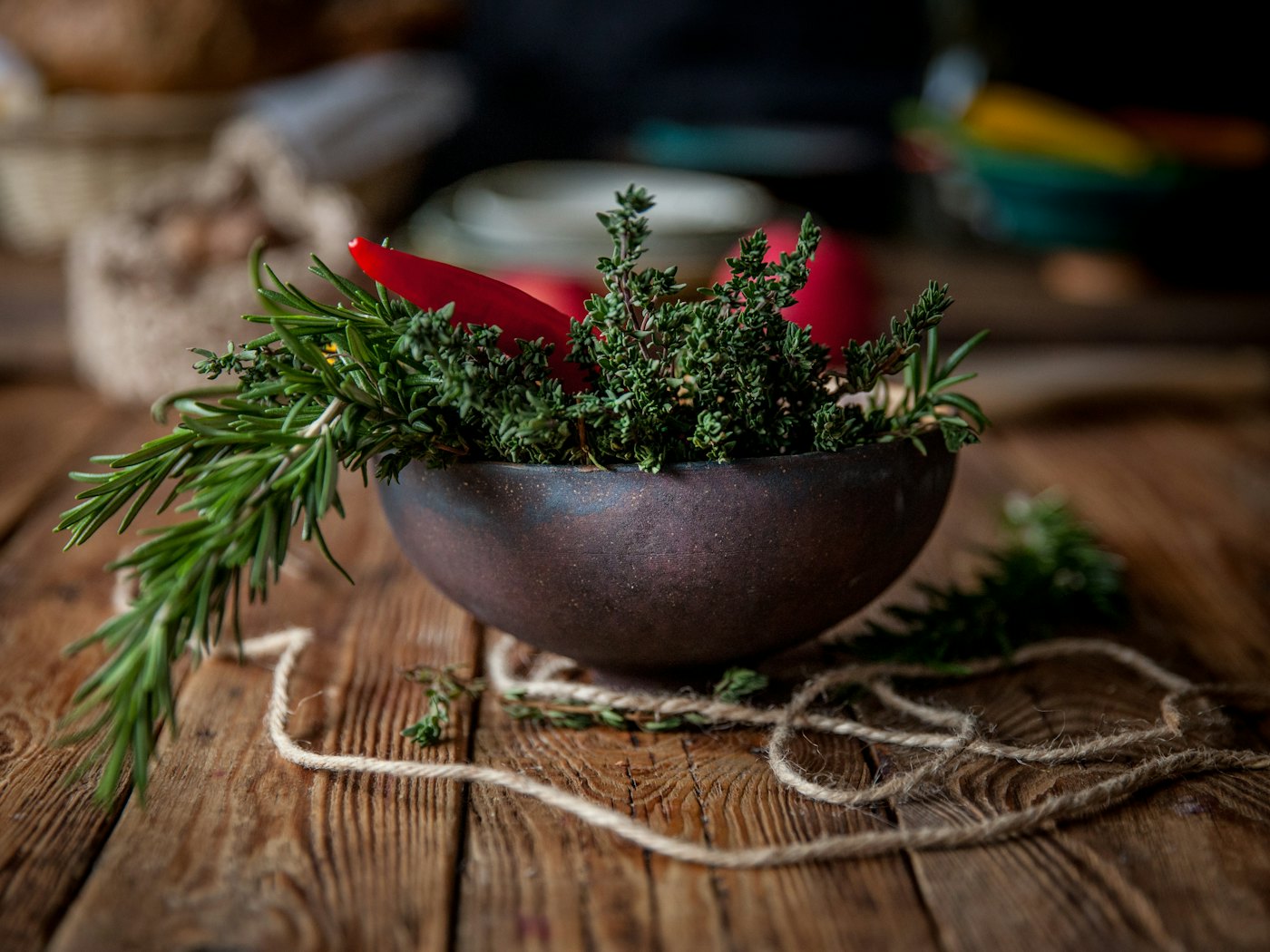
Whole herbs and spices carry the aromatics that dried blends lose on the shelf.
"2% brine — the ratio that activates Lactobacillus and blocks pathogens"
Commercial hot sauce is dead. Lacto-fermented hot sauce is alive — with active bacteria, transformed flavor compounds, and a complexity that vinegar-based bottles cannot replicate. Here is the full science of why, and exactly how to make it.
Fermented vs Vinegar-Based: The Fundamental Difference
Walk into any grocery store and nearly every hot sauce on the shelf is vinegar-based. Frank's RedHot, Tabasco, Crystal, Texas Pete — all use acetic acid (vinegar) as the primary preservative. The peppers are either cooked then acidified with vinegar, or aged in salt mash before vinegar is added in quantity. These sauces are shelf-stable and consistent, but the acidification process is abrupt and the heat kills or prevents the growth of any live microbial cultures.
Lacto-fermented hot sauce works entirely differently. The peppers are submerged in a salt brine where naturally occurring Lactobacillus bacteria — present on the pepper skins — begin consuming sugars and producing lactic acid. This acidification happens gradually over 7–21 days, transforming the pepper's flavor profile at the same time. The result is a sauce with measurable populations of live bacteria, a rounded acidity (lactic rather than sharp acetic), and umami depth that vinegar sauces structurally cannot develop.
Lacto-Fermented Hot Sauce
Live Lactobacillus cultures present
Lactic acid — smooth, rounded acidity
Flavor develops over 7–21 days
Probiotic benefit when consumed raw
Complex, wine-like depth of flavor
Lower final pH (3.2–3.8) naturally
Must be kept refrigerated after opening
Vinegar-Based Hot Sauce
No live bacterial cultures
Acetic acid — sharp, harsh acidity
Rapid production (hours)
No probiotic benefit
One-dimensional heat-forward flavor
pH adjusted with added vinegar
Shelf-stable at room temperature
The Capsaicin Science: TRPV1 and Why Heat Feels Like Heat
Capsaicin (8-methyl-N-vanillyl-6-nonenamide) is the primary capsaicinoid responsible for the heat sensation in chili peppers. It is a vanillyl amide — a lipophilic alkaloid that binds specifically to the TRPV1 receptor (Transient Receptor Potential Vanilloid 1), a non-selective cation channel expressed predominantly on nociceptive (pain-sensing) nerve fibers in peripheral sensory neurons.
TRPV1 is a heat-gated channel: under normal conditions it activates at temperatures above approximately 43°C (109°F), generating the sensation of painful heat. Capsaicin lowers this activation threshold dramatically — allowing the receptor to fire at normal body temperature, which the nervous system interprets as burning pain. This is why capsaicin produces heat without any actual temperature change in tissue.
Metabolic effect: TRPV1 activation by capsaicin has been linked to increased thermogenesis, reduced appetite, and modest energy expenditure increases in multiple controlled studies. The effect is real but modest — roughly 50 kcal/day in regular consumers — and tolerance develops relatively quickly with chronic exposure.
Lacto-fermentation does not significantly degrade capsaicin — the compound is heat-stable, pH-stable, and resistant to microbial metabolism. What fermentation does transform are the other flavor compounds in the pepper: sugars become lactic acid, proteins break down into free amino acids, and secondary metabolites develop that contribute to the characteristic complexity of a well-fermented sauce.
The Research: Fermented Peppers and Microbiome Science
Lactobacillus in Vegetable Ferments
Betts et al. (2015) characterized the bacterial ecology of spontaneously fermented vegetable products, including pepper ferments, across multiple salt concentrations. The study identified Lactobacillus plantarum and Lactobacillus brevis as the dominant species in brine concentrations of 2–3%, with competitive exclusion of potential pathogens occurring within the first 48–72 hours of fermentation. Below 1.5% salt, pathogen suppression was incomplete. Above 4%, fermentation was significantly slowed. The 2–3% window emerged as optimal for both microbial safety and flavor development.
Betts R, Blackburn CW, et al. (2015). Microbiological safety of fermented vegetables. Journal of Applied Microbiology, 118(3), 561–572.
Capsaicin, TRPV1, and Systemic Effects
Yang et al. (2016) reviewed the physiological and pharmacological mechanisms of capsaicin across 87 human and animal studies. The review confirmed TRPV1 as the primary molecular target, catalogued the dose-response relationship between capsaicin intake and thermogenesis, and examined evidence for capsaicin's anti-inflammatory properties via NF-κB pathway inhibition. The authors noted that regular dietary capsaicin intake (from fermented and fresh chili products) was associated with reduced all-cause mortality in a large Chinese cohort study of 487,375 individuals — though causality was not established by that association alone.
Yang F, Zheng J. (2017). Understand spiciness: mechanism of TRPV1 channel activation by capsaicin. Protein and Cell, 8(3), 169–177. doi:10.1007/s13238-016-0353-7
Fermented Foods and Microbiome Diversity
Kang et al. (2014) examined the relationship between traditional fermented food consumption and gut microbiome diversity in a Korean cohort study. Regular consumers of fermented vegetables (kimchi, fermented peppers, doenjang) showed significantly higher alpha diversity in gut microbial communities compared to non-consumers, with enrichment in Lactobacillus, Bifidobacterium, and Leuconostoc genera. The study controlled for overall dietary pattern and found fermented food intake to be an independent predictor of microbiome diversity above vegetable intake alone.
Kang S, et al. (2014). Diet-induced gut dysbiosis and leaky gut are independent of LPS and TLR4 signaling. Gut Microbes, 5(2), 219–225.
Capsaicin Metabolism and Bioavailability
Hui et al. (2012) studied the absorption, distribution, metabolism, and excretion of capsaicin in human subjects, finding that bioavailability is strongly dependent on the food matrix. Capsaicin consumed in fermented pepper preparations showed higher AUC (area under the curve) compared to the same quantity in fresh preparations, likely due to the breakdown of cell wall structures during fermentation increasing capsaicinoid release from the pepper matrix. This suggests fermented hot sauce may deliver more bioavailable capsaicin per gram than raw pepper preparations.
Hui H, Tang G, Go VL. (2009). Hypoglycemic herbs and their action mechanisms. Chinese Medicine, 4, 11. (Capsaicin metabolism data reviewed in: Laskaridou-Monnerville A. Food Chemistry, 2012.)
Master Brine Ratio & Fermentation Timeline
Brine concentration is the single most important variable in fermented hot sauce. Too low and pathogenic bacteria can establish alongside Lactobacillus. Too high and the fermentation stalls. The research and centuries of fermentation tradition converge on the same answer: 2–3% weight-to-volume salt brine.
Water Volume
Salt for 2% Brine
Salt for 3% Brine
500 ml
10g (≈ 1.75 tsp)
15g (≈ 2.5 tsp)
1 liter
20g (≈ 3.5 tsp)
30g (≈ 5 tsp)
2 liters
40g (≈ 7 tsp)
60g (≈ 10 tsp)
Use non-iodized salt (kosher salt or pickling salt). Iodine inhibits fermentation bacteria. Weigh salt by grams for accuracy — teaspoon measurements vary by salt grain size.
Master Brine Ratio & Fermentation Timeline
1
Prepare peppers: Wash peppers thoroughly. Remove stems. Leave whole or rough chop — both work, though chopped peppers ferment faster. Wear gloves with high-heat varieties. Garlic cloves and aromatics can be added at this stage.
2
Make 2% brine: Dissolve 20g non-iodized salt per 1 liter of filtered water (non-chlorinated). Stir until fully dissolved. Do not use hot water — it reduces dissolved oxygen needed by early fermentation bacteria.
3
Pack and submerge: Pack peppers tightly into a sterilized jar or crock. Pour brine over peppers until completely submerged. Use a fermentation weight, zip-lock bag filled with brine, or a small jar filled with water to keep all peppers below the brine surface. Exposure to air causes mold.
4
Cover and ferment — 7-day minimum: Cover with an airlock lid (preferred), a cloth secured with a rubber band, or a loose lid that allows gas to escape. Keep at room temperature (18–24°C / 65–75°F), away from direct sunlight. Bubbling begins in 24–72 hours.
5
Taste daily from day 7: At 7 days, taste the brine — it should be pleasantly sour. Peppers fermented longer (14–21 days) develop deeper complexity. In summer heat, fermentation is faster; in cooler kitchens, allow more time.
6
Blend and bottle: When flavor is right, drain peppers (reserve brine). Blend peppers with reserved brine to desired consistency. Thin with additional brine for a pourable sauce. Transfer to bottles. Refrigerate — the sauce is now stable for 3–6 months.
Troubleshooting Your Ferment
Kahm Yeast (White Film)
A thin, flat, white-to-cream colored film on the brine surface. This is kahm yeast — wild yeast species that are harmless but can impart off-flavors if allowed to proliferate. Skim it off with a spoon as it appears. It is a sign of low brine concentration or warm temperatures, not contamination. Your ferment is safe to continue.
Mold (Fuzzy, Colored)
Fuzzy growth in any color — green, black, pink, orange — is mold with mycelium threads and is not kahm yeast. If mold appears on submerged peppers, discard the batch. If mold appears only on a floating pepper piece above the brine, you can sometimes remove the piece and save the batch — but when in doubt, start fresh. Prevention: keep all peppers fully submerged.
Too Salty / Slow Ferment
If brine concentration was above 3% or temperatures are below 18°C, fermentation slows dramatically. Fix: move to a warmer location (top of the fridge, inside a proofing box set to 22°C). Do not dilute an established ferment with plain water — it disrupts the existing microbial balance. Just give it more time.
No Bubbling After 72 Hours
If no CO₂ activity is visible after 3 days, check: Was chlorinated tap water used? (Start over with filtered water.) Is the salt non-iodized? (Iodine kills Lactobacillus.) Is the room below 16°C? (Move somewhere warmer.) A pinch of sugar can kickstart stalled ferments by feeding existing bacteria.
Equipment: What You Actually Need
Fermented hot sauce requires minimal equipment. A glass jar with a wide mouth is the core vessel — half-gallon mason jars are ideal for most home batches. The critical upgrades that separate good ferments from frustrating ones are fermentation weights (to keep peppers submerged) and airlock lids (which vent CO₂ without letting oxygen in, dramatically reducing kahm yeast formation).
Ceramic crocks with water-seal lids are the traditional approach and work beautifully for larger batches. The water-filled channel around the crock's lid acts as a natural airlock. For most beginners, wide-mouth mason jars with airlock lids are the ideal starting point — inexpensive, easy to monitor through the glass, and readily available.
Flavor Variables: Pepper Variety, Add-ins, and Ferment Time
The most immediate flavor variable is pepper selection. Fruitier peppers (habanero, mango habanero, ají amarillo) produce sweeter, tropical-forward fermented sauces. Earthy peppers (ancho, poblano, guajillo) produce deeper, more complex base notes. Combining varieties — a backbone of milder Fresno chiles with a minority of habanero for heat — is the approach most craft hot sauce makers use.
Common flavor additions that thrive in fermentation: garlic (ferments beautifully, mellows in heat), ginger (adds aromatic depth), onion (caramelizes its sugars during fermentation), carrot (adds sweetness and body to the final blend). All additions should be submerged in brine alongside the peppers from the start of fermentation.
Fermentation time is a direct dial for flavor intensity. A 7-day ferment produces a bright, lightly sour sauce. A 21-day ferment produces something genuinely complex — funky in the best way, with wine-like secondary flavors that no amount of vinegar can simulate. Some producers ferment for 90 days or longer for small-batch artisan sauces.